What Florida homeowners need to know about Hurricane Isaias
Hurricane Isaias became the first hurricane of the 2026 Atlantic season on October 7 and put the Florida Panhandle and Big Bend under hurricane, tropical storm, and storm surge warnings. A quiet season can turn fast. The Atlantic hurricane season runs June 1 through November 30, and the steps below apply to every storm that threatens Florida.
The short answer: Before a hurricane, know your evacuation zone, build a supply kit, document your home and belongings, and confirm your hurricane deductible and flood coverage. After a hurricane, stay safe, photograph the damage, make temporary repairs to prevent more damage, report your claim promptly, and keep every receipt.
How do I prepare my home for a hurricane?
Start before a storm forms. Once a watch goes up, store shelves empty and insurers stop accepting new coverage.
-
Know your evacuation zone. Look up your flood zone on your county emergency management website or on FEMA.gov and decide now where you will go. If officials order your zone to evacuate, leave.
-
Build a supply kit. Ready.gov recommends one gallon of water per person per day for several days, a several-day supply of non-perishable food, a flashlight, a battery-powered or hand-crank radio, a first aid kit, extra batteries, and phone chargers with a backup battery. Add prescriptions and pet supplies.
-
Record a home inventory. Walk through every room and record video of your home and belongings, including closets, the garage, and serial numbers on electronics. Save it to cloud storage.
-
Protect your documents. Keep your insurance policy, IDs, deeds, and your agent’s phone number in a waterproof container, and store digital copies online.
-
Secure the outside of your home. Bring in patio furniture, grills, and decor. Trim trees, clear gutters, and install shutters or board up windows.
-
Fuel up and charge up. Fill your vehicle’s gas tank, charge every device, and keep some cash on hand in case card readers go down.
-
Plan for safe generator use. The CDC advises running generators outside, at least 20 feet from doors, windows, and vents, to prevent carbon monoxide poisoning.
What should I check in my insurance policy before a hurricane?
Review your coverage before a storm threatens your area. Insurers typically suspend binding, meaning no new policies or coverage changes, once a storm approaches. As Isaias approached, these restrictions took effect statewide in Florida on October 7, 2026.
Check these five areas of your policy:
-
Your hurricane deductible. Many Florida homeowners policies carry a separate hurricane or named storm deductible, often set as a percentage of your dwelling coverage limit rather than a flat dollar amount. Florida law requires insurers to offer options of $500, 2%, 5%, and 10% of dwelling limits, with exceptions for higher-value homes. In Florida, the hurricane deductible applies once per calendar year to covered hurricane losses with the same insurer, under Florida Statute 627.701.
-
Flood coverage. Homeowners and renters policies typically do not cover flood damage, according to FEMA, and storm surge counts as flood. Most flood policies take effect 30 days after purchase, so buy coverage well before a storm forms.
-
Your dwelling limit. Confirm your limit reflects what it would cost to rebuild your home today, not what you paid for it.
-
Loss of use coverage. Check whether your policy pays for temporary housing and added living costs if damage forces you out of your home.
-
Auto comprehensive coverage. Comprehensive auto coverage typically covers flood and falling-tree damage to your vehicle. Liability-only policies do not.
What should I do after a hurricane damages my home?
Follow these seven steps in order to protect your safety and your claim.
-
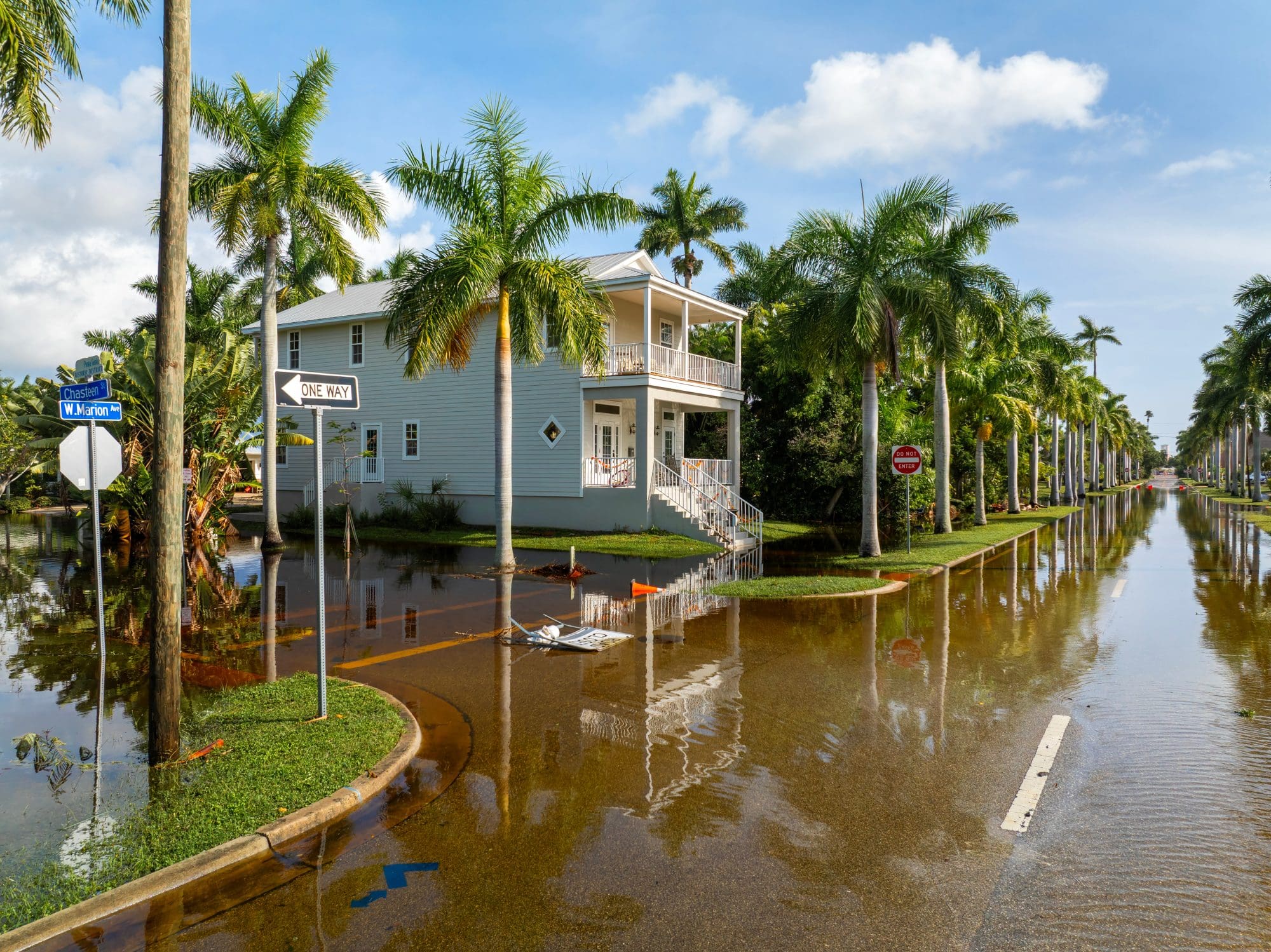
Stay safe first. Return home only after officials say it is safe. Avoid floodwater: the National Weather Service warns that 6 inches of fast-moving water can knock over an adult and 12 inches can carry away most cars. Stay away from downed power lines.
-
Document the damage before you clean up. Photograph and video every damaged area inside and outside, including water lines on walls, the roof, and damaged belongings. Write down what you see and when.
-
Prevent further damage. Cover roof openings with tarps, board broken windows, and remove standing water when it is safe. Hold off on permanent repairs until your insurer inspects the damage.
-
Report your claim promptly. Call your insurer or your agent as soon as you can. Write down your claim number, your adjuster’s name, and the date and details of every conversation.
-
Save every receipt. Keep receipts for tarps, supplies, emergency repairs, and hotel stays or meals if you cannot live at home. Your insurer may ask for them later.
-
Know your claim deadlines. In Florida, you must report an initial or reopened claim within 1 year of the date of loss and a supplemental claim within 18 months, under Florida Statute 627.70132. Your insurer must acknowledge your claim within 7 calendar days and pay or deny it within 60 days of notice, under Florida Statute 627.70131. Report early, since damage is easier to document while it is fresh.
-
Ask for help if you disagree with the outcome. Florida homeowners can request free mediation for residential property claims through the Florida Department of Financial Services; the insurer pays the cost. Call the DFS Insurance Consumer Helpline at 1-877-693-5236, open 8 a.m. to 5 p.m. ET, Monday through Friday.
What mistakes can hurt a hurricane insurance claim?
Avoid these five mistakes after a storm:
-
Waiting to report. Delays make damage harder to verify and push you closer to filing deadlines.
-
Throwing out damaged items too soon. Photograph everything first, and ask your adjuster before you discard large items like carpet or furniture.
-
Making permanent repairs before inspection. Temporary fixes protect your home. Full repairs before an adjuster visits can leave no evidence of the original damage.
-
Hiring the first contractor at your door. Scammers target storm-damaged neighborhoods. Verify a contractor’s license and insurance, get written estimates, and never pay the full cost upfront.
-
Assuming your homeowners policy covers flood. Learn now whether you have flood coverage, not after the water recedes.
Hurricane insurance FAQs
Does homeowners insurance cover hurricane damage?
Homeowners insurance typically covers wind damage from a hurricane, subject to your hurricane or named storm deductible. Standard homeowners policies typically exclude flood damage, including storm surge, so you need a separate flood policy for that protection.
How long do I have to file a hurricane claim in Florida?
Florida law gives you 1 year from the date of loss to report an initial or reopened property claim and 18 months to report a supplemental claim. Report as soon as possible, since early reporting makes damage easier to document.
Can I buy or change insurance when a hurricane is coming?
Usually not. Insurers typically suspend new policies and coverage changes once a storm threatens an area, and most flood policies require a 30-day waiting period. Review your coverage at the start of hurricane season.
How long does an insurer have to pay a hurricane claim in Florida?
Florida insurers must pay or deny a property claim within 60 days of receiving notice and must acknowledge your claim within 7 calendar days.
Does the hurricane deductible apply to every storm?
In Florida, the hurricane deductible applies once per calendar year to covered hurricane losses with the same insurer. If a second hurricane damages your home that year, your insurer may apply the remaining hurricane deductible or your standard deductible, whichever is greater. Your declarations page lists your hurricane deductible.
Should I hire a public adjuster?
A licensed public adjuster can represent you with your insurer, but be cautious of unfamiliar adjusters who come to your door. Talk with your agent first to understand your options.
Get help from SandStone before and after the storm
SandStone Insurance Partners helps Florida homeowners review hurricane deductibles, add flood coverage, and work through claims after a storm. As an independent agency, we compare options from multiple carriers and stay in your corner when you file.
Call SandStone at 800-578-5578 to review your coverage before the next storm.